
.png)
Procurement teams sourcing earthmoving equipment for African projects face a critical choice between two dominant supply routes: established OEM hubs in countries like the USA, Japan, and Germany, versus emerging manufacturing routes from nations such as China, India, and Turkey. The manufacturing country determines route strength, supplier credibility, and delivery control. Each path carries distinct risk profiles, cost structures, and support capabilities that directly impact project timelines and total ownership costs.
This comparison weighs both routes against criteria that matter in Africa’s delivery reality: dealer density, corridor fit, financing options, and after-sales logistics.
What Buyers Need to Compare First
Apply these weighted criteria before shortlisting suppliers or countries:
Route Strength and Delivery Control
- Port selection and vessel frequency to your corridor
- Congestion risk and dwell time patterns
- Inland transport control (permits, axle restrictions, police clearances)
- Documentation ownership and border clearance risk
Supplier Credibility and Support Density
- OEM/dealer authority validation in-country
- Field technician capacity and response times
- Parts fill-rate SLAs and regional depot coverage
- Warranty recognition and claims processing
Commercial and Financial Fit
- Lead time certainty and factory slot visibility
- Financing options (ECA support, captive finance, supplier credit)
- Total landed cost including duties, shipping, PDI
- Resale value and secondary market depth
Technical and Compliance Match
- Engine tier alignment with local fuel standards
- Mine/site safety system requirements
- Telematics and remote diagnostics coverage
- Operator training and skill-set availability
- Planned maintenance and downtime windows
Score each criterion 0-5 with appropriate weights. For African corridors, prioritize: dealer/service density, corridor shipping reliability, and parts logistics lead times. Price without these three creates false economy.
How Established OEM Hubs Perform in Practice
Route A: USA, EU (Germany/Sweden), Japan, South Korea
Established manufacturing hubs deliver proven supplier credibility and mature support networks. These routes excel in three critical areas:
Supplier Credibility Advantage Deep dealer networks span Southern, West, and East Africa with validated warranty processes. Continuous duty reliability in mines and infrastructure projects comes with documented uptime data. OEM authority letters carry weight with project financiers and insurance providers.
Support Infrastructure Strength Regional parts depots in Johannesburg serve SADC corridors while North African operations connect via EU ports. Telematics systems provide remote diagnostics and predictive maintenance alerts. Exchange component programs minimize downtime during major repairs.
Financing and Documentation Control ECA support from EXIM banks, KfW, and JBIC provides competitive financing structures. Established trade lanes offer predictable shipping schedules and known documentation requirements. Insurance providers understand these routes and price risk accordingly.
Where This Route Shows Weakness Higher acquisition costs reflect brand premiums and developed-market labor rates. Longer lead times from factory to African ports can stretch 16-20 weeks. Parts pricing carries developed-market margins that impact total cost of ownership.
When Emerging Manufacturing Routes Become the Better Fit
Route B: China, India, Turkey, Brazil
Emerging manufacturing hubs compete aggressively on cost and delivery speed while building support capabilities. These routes offer distinct advantages in specific scenarios:
Cost and Speed Advantages Acquisition costs run 20-40% below established OEM pricing for comparable specifications. Factory-to-port lead times often compress to 8-12 weeks. Aggressive financing terms include supplier-backed letters of credit and extended payment periods.
Growing Support Networks Chinese manufacturers have invested heavily in African dealer networks over the past decade. Parts pricing reflects manufacturing cost advantages rather than developed-market margins. Local assembly operations in countries like Kenya and Nigeria reduce import duties and delivery times.
Corridor Alignment Direct vessel services from Chinese ports to East and West African destinations reduce transshipment risk.
Where Gaps Persist Dealer support density remains uneven across African corridors. Warranty claim processing can involve longer resolution cycles. Resale values typically discount 15-25% compared to established brands. Parts availability during the first 2-3 years post-delivery requires careful planning.
How to Make the Call More Deliberately
Align your sourcing route with project risk tolerance and corridor realities. This table summarizes the key trade-offs:
| Criterion | Established OEM Hubs (USA, EU, Japan) | Emerging Manufacturing Routes (China, India, Turkey) |
|---|---|---|
| Acquisition Cost | Higher | Lower (20-40% less) |
| Lead Time | Longer (16-20 weeks) | Shorter (8-12 weeks) |
| Dealer & Parts Support | Mature, dense networks | Developing, uneven coverage |
| Resale Value | High | Lower (15-25% less) |
| Financing | Strong ECA support | Aggressive supplier-backed terms |
| Uptime & Reliability | Proven, high | Variable, improving |
Choose Established OEM Hubs When:
- Project financing requires proven supplier credentials
- Continuous duty applications demand maximum uptime
- Your corridor has mature dealer support from established brands
- Total cost of ownership matters more than acquisition cost
- Resale value preservation is critical for asset management
Select Emerging Manufacturing Routes When:
- Capital efficiency drives equipment acquisition decisions
- Your timeline benefits from shorter factory lead times
- Dealer support gaps can be managed through direct manufacturer relationships
- Parts inventory management is handled in-house
- Project duration limits resale value concerns
The manufacturing country behind your equipment shapes every aspect of project delivery. Rather than choosing one route exclusively, a hybrid sourcing strategy often delivers the best results, balancing risk management with cost optimization. Apply commercially disciplined criteria to compare routes, not just brands. Your corridor, timeline, and risk tolerance will ultimately determine which manufacturing hub, or combination of hubs, provides the best strategic fit.
TerraSource Africa provides commercially controlled sourcing and delivery partnerships for project-critical mobile equipment across African project corridors. Contact us to align your equipment procurement with corridor realities and delivery requirements.
Read next
Related posts
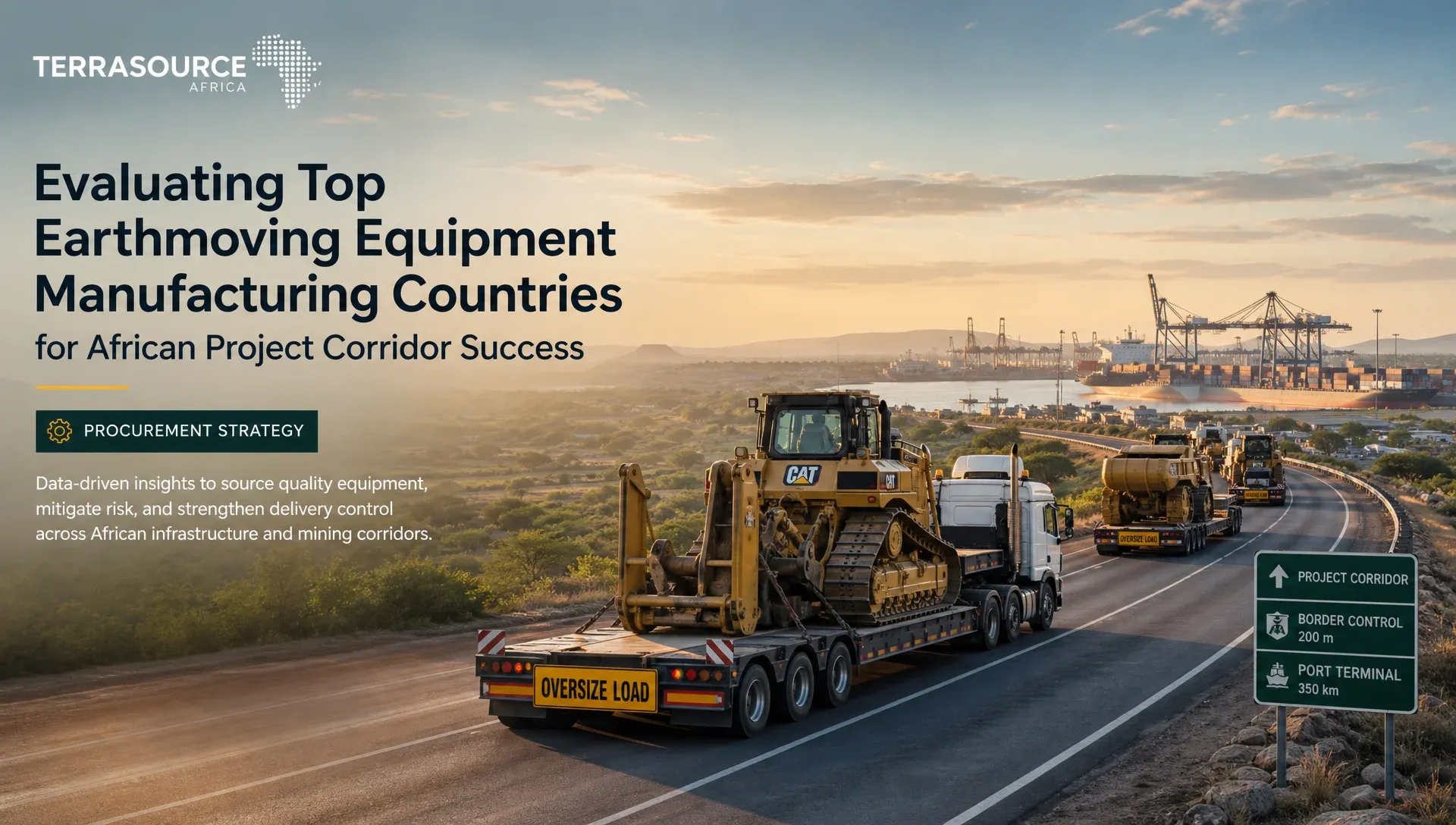
Earthmoving Equipment Buyers Should Compare Carefully
A criteria-led comparison of earthmoving equipment manufacturing countries, focusing on supplier reliability, delivery logistics, and fit for African infrastructure and mining project corridors.
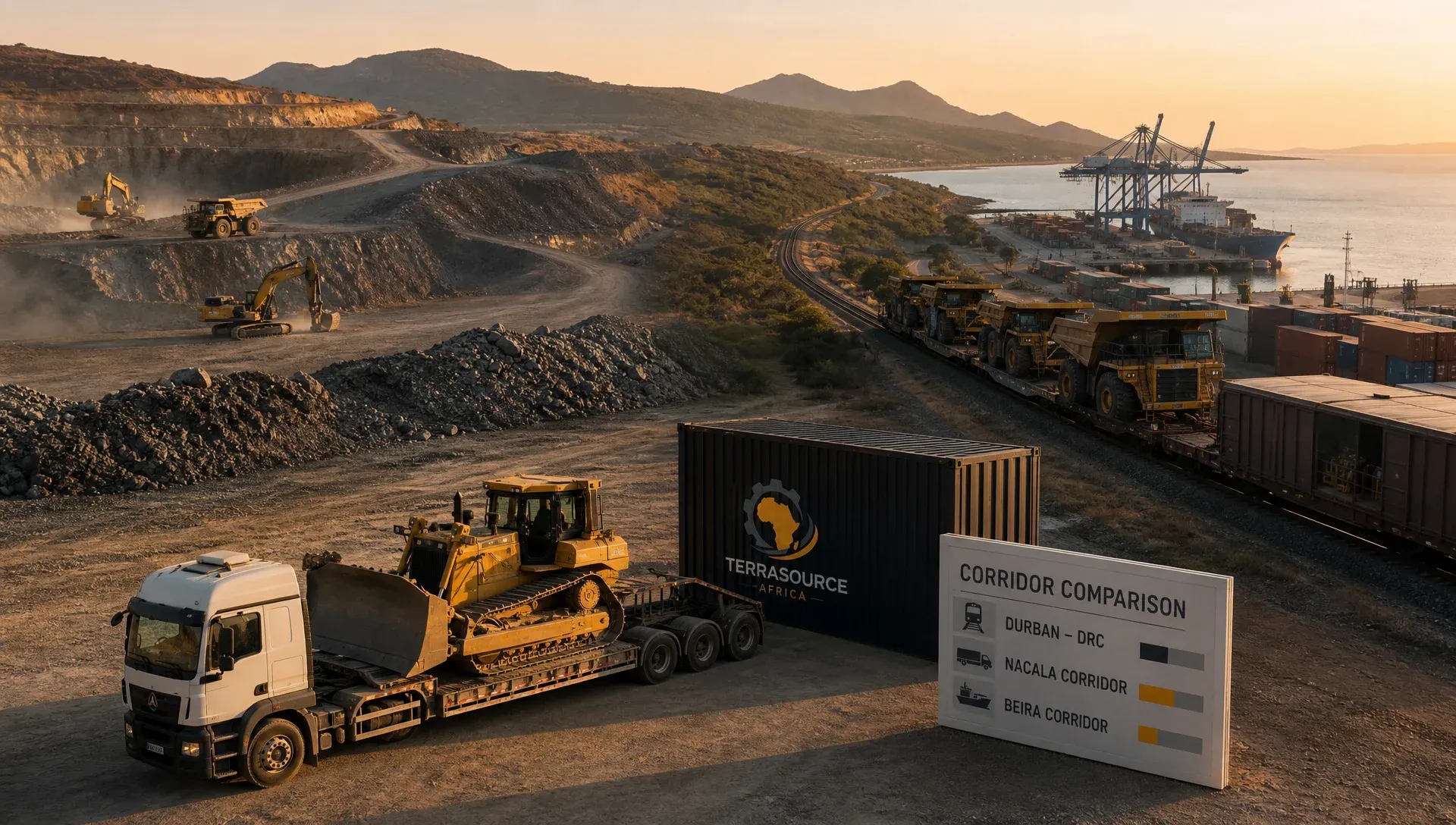
Sourcing for Africa's Top Mining Countries? A Guide to Corridor Risk & Landed Cost
Procuring equipment for top mining countries like the DRC? This guide compares sourcing routes (OEM, dealer, broker) and analyzes corridor risks (Durban-DRC, Nacala, Beira) to help you control total landed cost and avoid project delays.
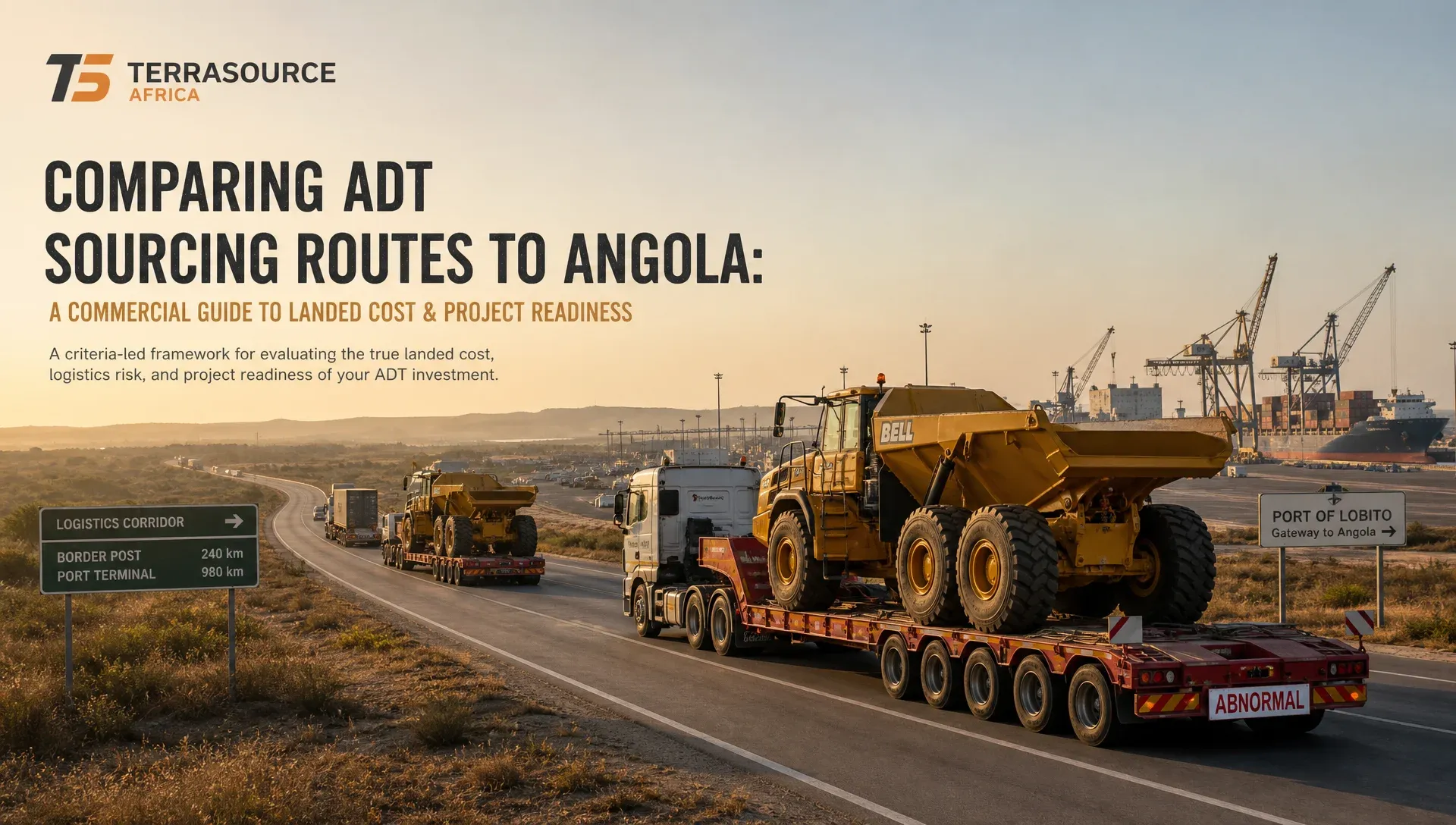
Articulated Dump Truck Angola: Which Sourcing Route Minimizes Project Risk?
Don't let hidden costs derail your Angola project. This guide compares three ADT sourcing routes—OEM, local agent, and integrated partner—to help you calculate true landed cost and manage delivery risk.