
.png)
What the Decision Actually Turns On
In Africa’s infrastructure corridors, earth-moving equipment procurement is a high-impact, commercially controlled decision. The right choice secures not just productivity but also project timeline discipline and budget integrity.
Key selection criteria:
- Operational Role and Productivity: Will the equipment match corridor-specific soil, volume, and terrain demands, or will it slow progress in critical phases?
- Supplier Credibility: Are you sourcing from suppliers with verifiable track records and proven cross-border delivery in your corridor?
- Route Strength and Delivery Control: What is the realistic risk of delays from logistics bottlenecks, customs, or unreliable infrastructure?
- Total Procurement Cost and Uptime: Beyond sticker price, what are the true lifecycle costs—maintenance, spares, and downtime included?
A commercially disciplined procurement process weighs these factors, balancing immediate site needs with the long-term realities of African corridor logistics and supplier performance.
How the First Route Performs
Excavators and bulldozers underpin bulk earth-moving and initial site works across Africa’s most active corridors.
Strengths:
- Versatility and Throughput: Excavators handle deep trenching, heavy lifting, and mass excavation. Bulldozers excel at clearing, grading, and pushing material across varied terrain.
- Route-Ready Supplier Networks: In dominant cross-border corridors—such as those linking South Africa, Zambia, and Botswana—Tier-1 suppliers and service networks are well established. This depth supports project-critical uptime (The Villager).
- Aftermarket Certainty: Strong representation of OEM and reputable aftermarket providers improves parts availability and reduces service delays.
Weaknesses:
- Delivery Control Risks: Oversized units face significant cross-border transport and customs challenges. Even with South Africa’s rail reforms, corridor bottlenecks are a persistent risk (Business Insider Africa).
- Procurement Cost Exposure: High upfront investment and operating costs, especially for genuine Tier-1 units. Lower-cost, secondary-market options often lack warranty clarity and carry hidden condition risks.
- Supplier Variability: Not all suppliers can demonstrate consistent delivery or support across all corridors—procurement discipline is essential to avoid costly surprises.
How the Alternative Route Performs
Graders and wheel loaders serve as specialist tools for finishing, roadworks, and material handling—core needs in corridor maintenance and infrastructure upgrades.
Strengths:
- Precision and Deployment Speed: Graders deliver accurate road leveling and drainage control, while wheel loaders rapidly shift bulk materials. Their lighter profiles mean faster, less expensive cross-border transport.
- Sourcing Flexibility: More suppliers can deliver mid-sized graders and loaders, often with shorter lead times and less customs friction.
- Delivery Control: Easier to mobilize in corridors with infrastructure constraints, minimizing delivery risk for time-sensitive phases.
Weaknesses:
- Operational Scope Limits: Neither graders nor loaders can match the brute force of excavators or bulldozers for mass earth-moving. Over-reliance risks project slippage if bulk work is underestimated.
- Supplier Fragmentation: The supplier landscape is less consolidated, increasing the risk of sub-standard equipment or unreliable after-sales support. Procurement discipline and supplier vetting are non-negotiable.
- Aftermarket Gaps: In less-developed corridors, parts and service for specialty models can be inconsistent, raising downtime risk.
How to Choose More Deliberately
For project-critical procurement along African corridors, align equipment choice with both site needs and corridor realities:
- Prioritize Excavators/Bulldozers for bulk earth-moving, major clearing, or heavy grading—especially where strong supplier networks and delivery control are proven. Insist on supplier references, route-tested delivery guarantees, and robust after-sales commitments.
- Deploy Graders/Wheel Loaders for precision finishing, roadworks, or rapid material handling where lighter equipment profiles and swift deployment are commercially decisive. Scrutinize supplier credibility and verify support infrastructure before awarding contracts.
Commercial Discipline: Always privilege supplier credibility and route strength over headline pricing. Insist on delivery control, after-sales guarantees, and clear uptime commitments. Where procurement risk is elevated—due to corridor volatility or supplier fragmentation—engage a partner with proven cross-border delivery control and project corridor expertise, such as TerraSource Africa. This approach secures buyer-side clarity and protects project timelines from predictable sourcing failures.
Read next
Related posts
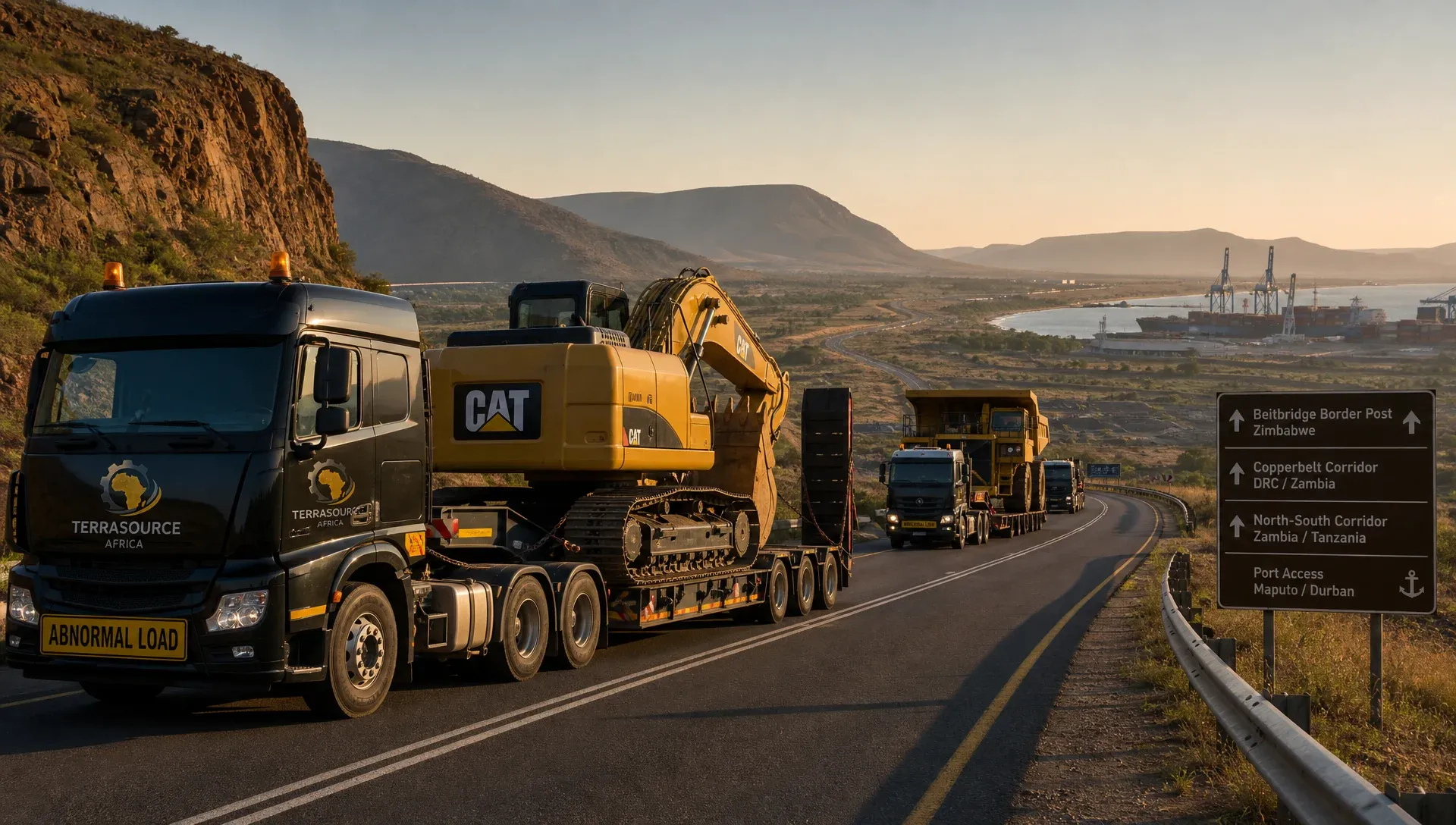
Beitbridge, Kasumbalesa & Beyond: Navigating Africa's Most Challenging Equipment Corridors
Discover which routes across Africa are the most challenging for moving earthmoving equipment. This guide analyzes the risks of Beitbridge, Kasumbalesa, and other key corridors, showing buyers how to control landed costs and avoid project delays.
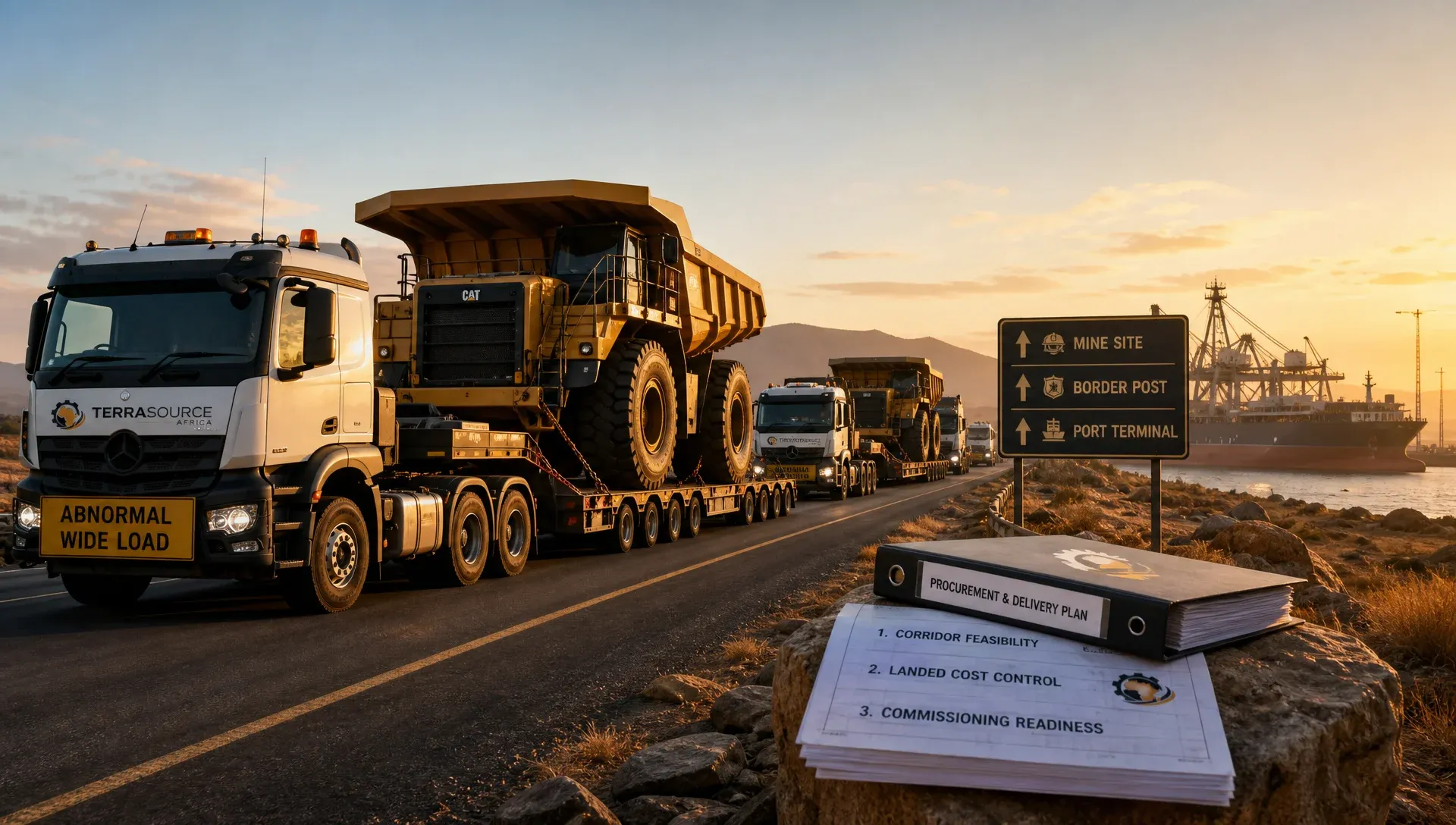
Beyond Unit Price: 3 Procurement Levers Mine Operators Must Control in Africa
Stop letting procurement's unit-price focus derail your mining schedule. Discover the three operational levers mine operators must control to manage corridor risk, guarantee delivery, and own total landed cost in Africa.
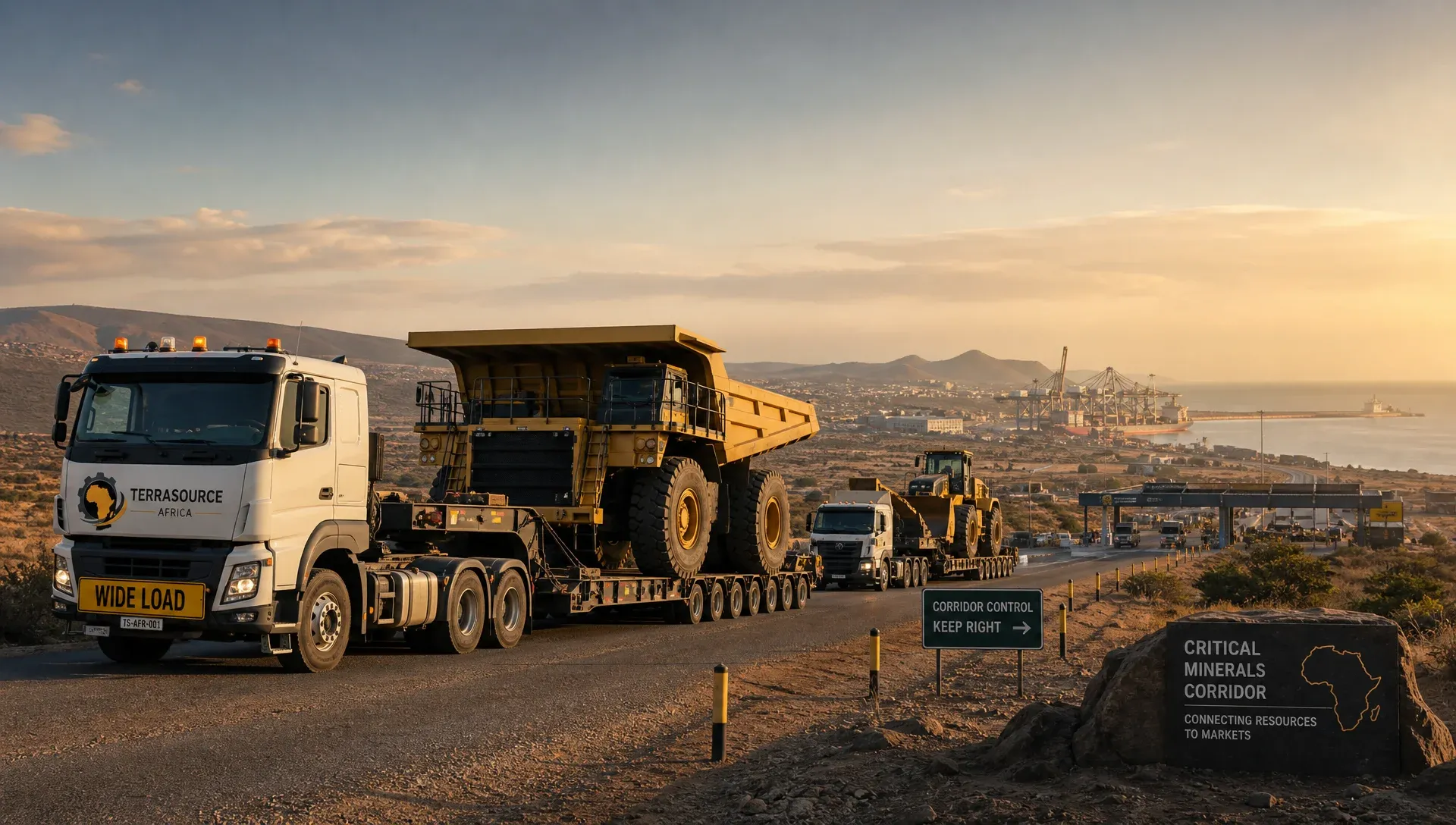
Africa's Critical Minerals Boom: Is Your Equipment Strategy Risking It All?
Africa's critical minerals boom is forcing rushed equipment decisions. Learn why a corridor-first procurement strategy is essential to protect project timelines, control landed costs, and avoid catastrophic delays.