
.png)
What the Decision Actually Turns On
Shift the conversation from brands to geographies. For project‑critical mobile equipment, the choice of manufacturing country—and its export routes—sets the range of outcomes you can reliably achieve on African corridors.
Lock down these criteria before comparing offers:
- Landed cost and FX exposure: Factory price plus ocean freight, insurance, duty/VAT, port/terminal handling, and last‑mile costs. Hedge material FX pairs (USD/EUR/JPY/CNY). Bunker surcharges and rerouting can swing unit economics.
- Route strength into your corridor: Sailing frequency and schedule integrity to Durban, Maputo, Beira, Walvis Bay, Mombasa, and Dar es Salaam. Red Sea/Suez instability increases variance for East Africa; Cape diversions add transit days. Southern Africa’s inland reliability should improve as South Africa opens its freight rail to private operators, easing road bottlenecks from Durban into mining belts (Business Insider Africa). East Africa’s rising trade density supports better vessel frequency and port performance (Business A.M).
- After‑sales footprint: Dealer credibility, regional parts hubs, field service coverage, and warranty turnaround time along cross‑border delivery routes.
- Supplier credibility and paperwork hygiene: Verifiable build origin and serial lineage, export controls compliance, correct conformity documentation, and clean chains of custody for corridor inspections.
- Technical fit and fuel tolerance: Emissions tier alignment (Tier 2/3 vs Tier 4/Stage V), sulphur tolerance, telematics, safety packages, and attachment ecosystems relevant to your production plan.
- Delivery timeline certainty: Factory slot, PDI readiness, pre‑shipment inspection windows, port berths, and customs risk at transshipment.
- Lifecycle economics: Uptime track record, parts burn rate, rebuild pathways, and residual value in your resale market.
- Financing and terms: Captive OEM finance, bank L/Cs, or ECA structures; penalties and remedies for missed dates.
- Documentation discipline: Incoterms that preserve buyer‑side clarity and delivery control; correct HS codes; certificates of conformity; alignment with AfCFTA and regional standards.
Two commercially distinct routes dominate: Asia‑Pacific manufacturing (primarily China and Japan) and Transatlantic manufacturing (USA and EU). Each route prices, moves, and supports differently across African project corridors. For additional corridor factors, see our field notes on opening equipment supply corridors.
How the First Route Performs
Route: Asia‑Pacific manufacturing (China and Japan)
Where it outperforms on procurement discipline:
- Landed cost advantage: China‑origin excavators, loaders, and graders often set the floor on capex per tonne of productivity. Japanese pricing runs higher than China but typically below many USA/EU peers for like‑for‑like classes.
- Build availability and speed: Shorter build cycles on common classes (20–36 t excavators, 3–5 m³ loaders). High outbound capacity keeps factory‑to‑vessel lead times tight.
- East Africa route strength: Dense sailings into Mombasa and Dar es Salaam through Suez in normal conditions compress transit and improve schedule control (Business A.M).
- Technical fit flexibility: Broad Tier 2/3 availability for variable fuel quality. Japanese OEMs deliver stable hydraulics and operator comfort, particularly in mid‑ to heavy‑class machines.
- Financing latitude: Competitive vendor/deferred payment structures from leading Chinese OEMs and trading houses; generally pragmatic L/C acceptance.
Where the tradeoffs bite:
- Route volatility via Suez: Red Sea disruptions or Suez congestion can force Cape reroutes, adding 10–14 days to schedules and diluting freight savings; Southern Africa legs may still hinge on road haulage from Durban during rail transition phases.
- Support depth varies by country: Chinese OEM dealer maturity is improving but uneven; parts fill rates can slip for non‑core models. Japanese networks are strong but niche attachments or less common specs may wait.
- Supplier credibility dispersion: Top‑tier Chinese and Japanese OEMs are solid. Grey‑market assemblers and non‑OEM traders create serial opacity and warranty risk. Procurement discipline must verify build origin and back‑to‑back warranty.
- Residual value curve: Japanese units tend to hold value well. Many Chinese brands are improving but still trade at a discount in several African secondary markets.
- Emissions alignment: Some Japanese exports carry Tier 4 components that require factory configuration or derating for high‑sulphur environments.
Best‑fit scenarios:
- Corridor bias: East Africa deployments that prioritize speed and cost control via Mombasa/Dar.
- Project profile: Time‑sensitive civil works, quarrying, and contract mining packages targeting rapid mobilization and acceptable TCO rather than maximum resale.
- Technical stance: Fleets standardized on Tier 2/3 with strong utilization and straightforward attachment needs.
How the Alternative Route Performs
Route: Transatlantic manufacturing (USA and EU)
Where it leads against the criteria:
- Supplier credibility and lifecycle control: Deep engineering lineage, documented build histories, robust OEM warranties, and mature rebuild programs—especially for dozers, ADTs, and large excavators. Residual values are typically stronger across Southern African resale markets.
- After‑sales footprint: Broad dealer and parts hub presence in Southern Africa (notably Gauteng) and key East African capitals, with structured field service programs and planned component exchange.
- Inland delivery resilience: Opening South Africa’s rail freight network to private operators is a structural tailwind for Durban‑to‑mine corridors, improving predictability beyond road‑only moves (Business Insider Africa).
- Route strength to Southern Africa: Regular EU–Southern Africa loops and competitive RoRo for rolling stock support steady schedules. High Europe–Africa trade volumes reinforce shipping density and logistics services (Businessday NG).
- Documentation and compliance clarity: Strong conformity documentation practices and export controls compliance help equipment clear corridor inspections with fewer exceptions.
Where the tradeoffs appear:
- Upfront price and freight: Factory pricing is usually higher, and Atlantic freight per CBM/ton can run above Asia‑origin alternatives, particularly on containerized attachments.
- Build‑slot lead times: Large‑class units and specialized options may carry longer factory queues, affecting time‑to‑site on critical paths.
- Emissions mismatch risk: Many EU/US units are Tier 4/Stage V. Without OEM‑approved conversion or alternative engine packages, high‑sulphur environments risk DPF/aftertreatment issues. Plan for correct spec at source—retrofits after arrival are costlier and slower.
- East Africa routing sensitivity: EU‑to‑East Africa flows often depend on Suez; workarounds increase days and bunker exposure during disruptions.
Best‑fit scenarios:
- Corridor bias: Southern Africa projects leveraging Durban imports and improving rail for inland moves; multi‑year contracts where uptime and residual value dominate.
- Project profile: Life‑of‑mine fleets, owner‑operator mines, and high‑utilization civil programs that monetize higher availability and stronger rebuild pathways.
- Technical stance: Buyers standardizing on OEM telematics, structured component exchanges, and clearly defined rebuild cycles.
How to Choose More Deliberately
Use a criteria stack, then commit to the route that protects delivery control at the lowest acceptable risk.
Choose Asia‑Pacific when:
- You must land standard classes fast into East Africa with strong sailing frequency and can accept Suez‑linked volatility.
- Tier 2/3 spec fits your fuel profile, and your team values capex efficiency over maximum resale.
- Dealer coverage and parts SLAs at your sites are verified and adequate for planned utilization.
Choose Transatlantic when:
- You operate in Southern Africa and can leverage improving rail legs from Durban for schedule integrity.
- Uptime, structured rebuilds, and residual value outweigh initial capex—especially for dozers, ADTs, and large excavators.
- You require tight documentation, Tier 4/Stage V capability for low‑sulphur fuel, or OEM‑backed conversions.
Regardless of route:
- Nail Incoterms that preserve buyer‑side clarity (e.g., FOB/CFR with controlled marine insurance, or DAP with audited inland plans). Avoid terms that obscure hand‑off points.
- Pre‑clear emissions and fuel compatibility at source. Lock conversion kits or alternate engine builds into the purchase order.
- Hedge FX where swings move unit economics. Track bunker surcharges and transshipment risk through to landed price.
- Verify serial lineage, warranty back‑to‑backs, and paperwork chains that meet corridor inspection standards.
If your corridor or schedule carries material uncertainty, bring in a partner whose job is delivery control, not inventory disposal. TerraSource Africa is a commercially disciplined sourcing and delivery partner for project‑critical mobile equipment across African project corridors. We structure supplier credibility checks, route strength assessments, and cross‑border delivery plans that keep procurement discipline intact.\
Read next
Related posts
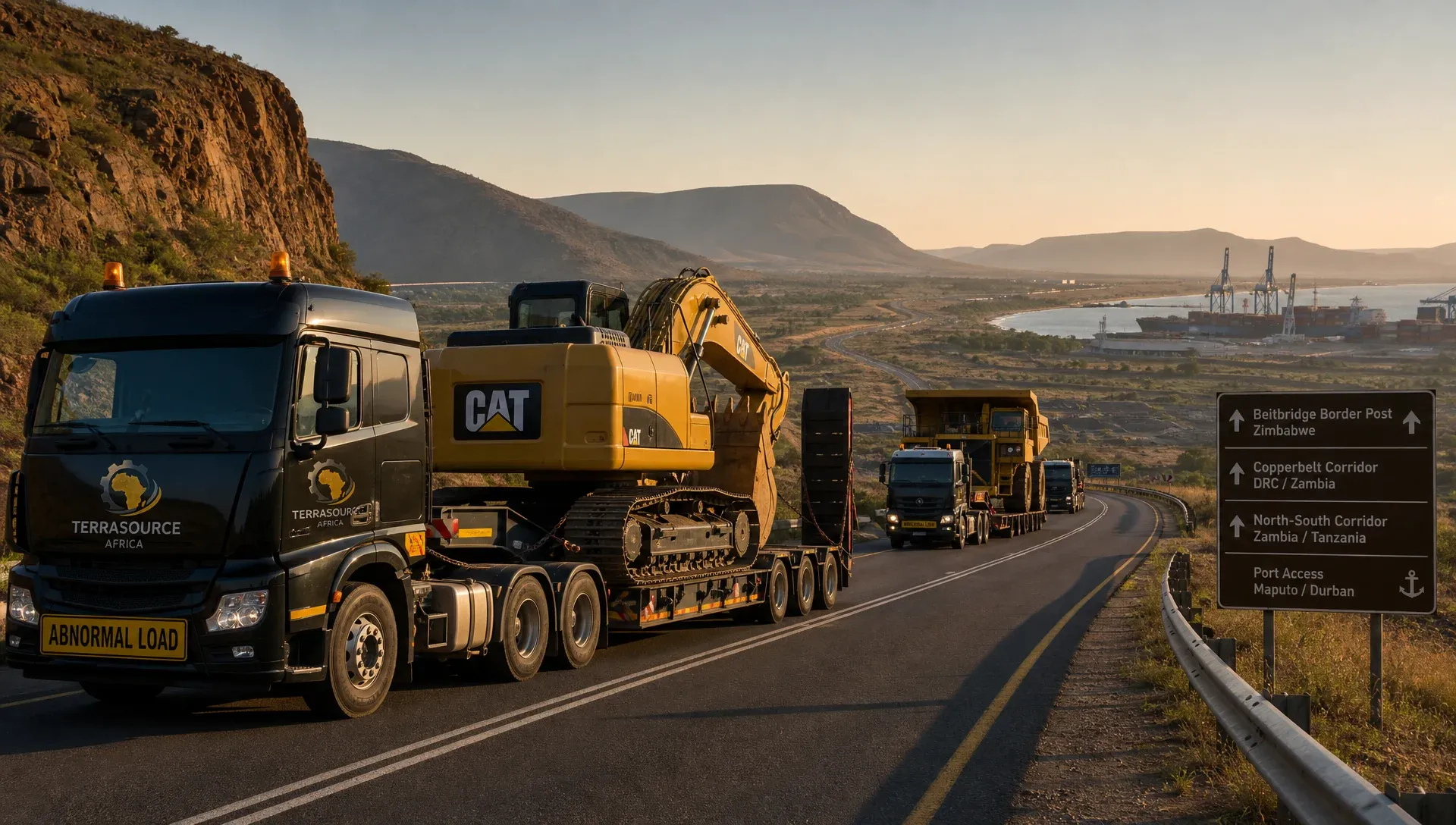
Beitbridge, Kasumbalesa & Beyond: Navigating Africa's Most Challenging Equipment Corridors
Discover which routes across Africa are the most challenging for moving earthmoving equipment. This guide analyzes the risks of Beitbridge, Kasumbalesa, and other key corridors, showing buyers how to control landed costs and avoid project delays.
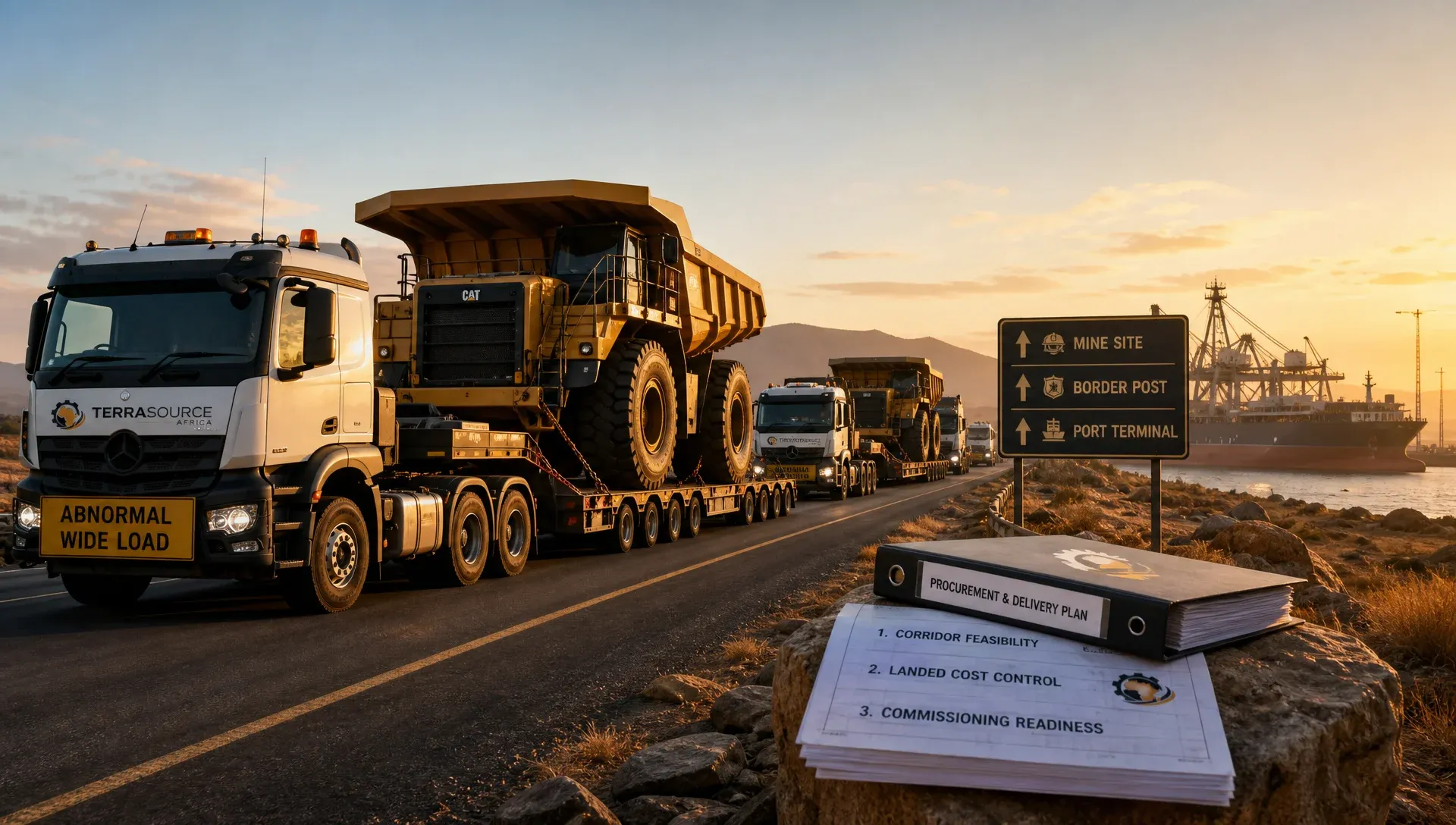
Beyond Unit Price: 3 Procurement Levers Mine Operators Must Control in Africa
Stop letting procurement's unit-price focus derail your mining schedule. Discover the three operational levers mine operators must control to manage corridor risk, guarantee delivery, and own total landed cost in Africa.
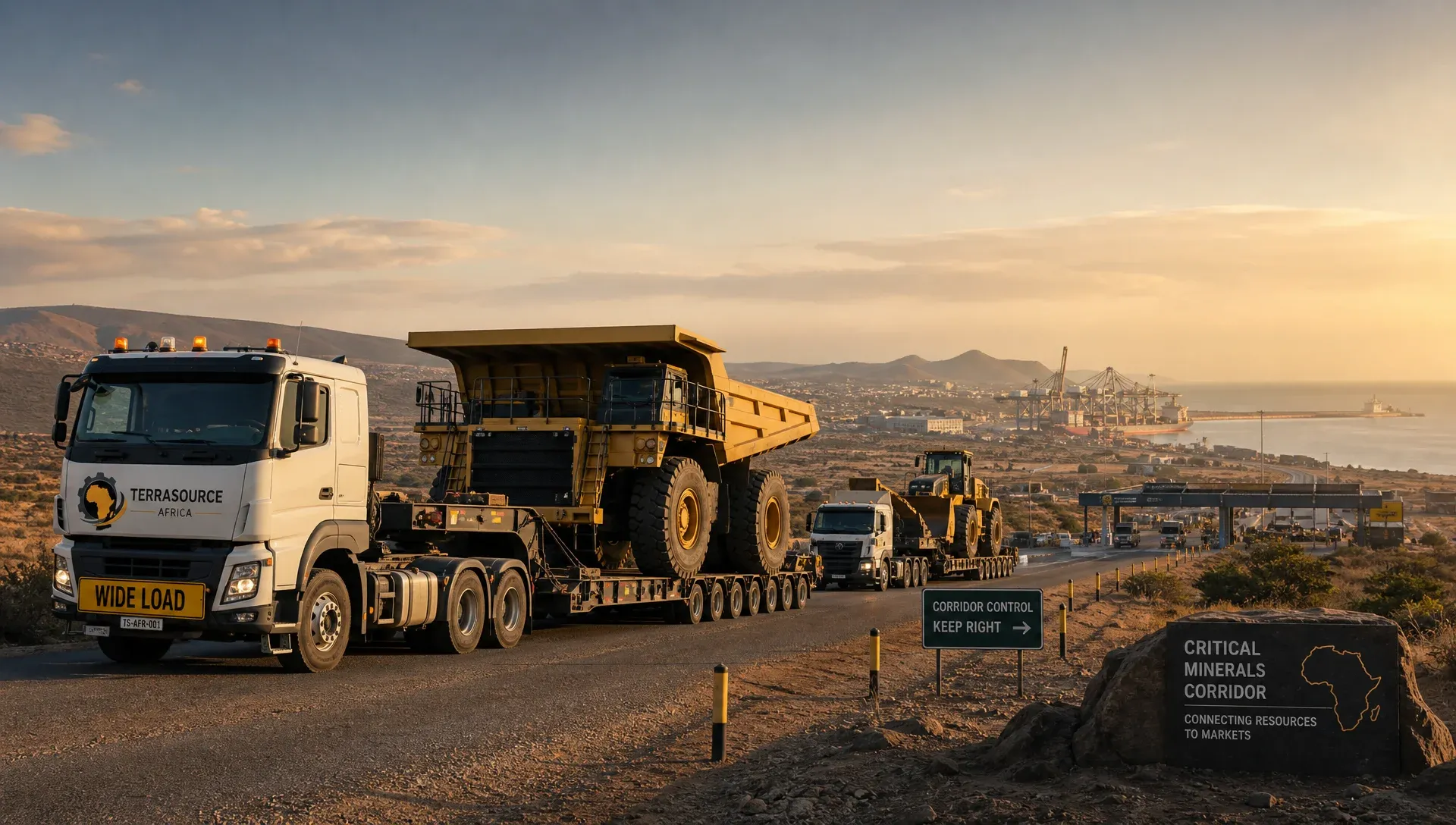
Africa's Critical Minerals Boom: Is Your Equipment Strategy Risking It All?
Africa's critical minerals boom is forcing rushed equipment decisions. Learn why a corridor-first procurement strategy is essential to protect project timelines, control landed costs, and avoid catastrophic delays.